

Organize a deep cabinet by making the back zone accessible as a unit: group related items in pull-forward bins or trays instead of lining up loose objects in several hidden rows.
Depth becomes useful only when the back of the cabinet can move toward you. The common mistake is treating a deep shelf like a display shelf and building three rows of unrelated items. A better system uses frequency, weight and pull-forward containers to make every zone reachable.
Empty and measure the cabinet
Measure interior width, depth and height, then note hinges, pipes, shelf supports and door hardware. Measure the opening as well as the inside because a bin that fits the shelf may not pass through the door.
Check the shelf condition and rating before loading heavy appliances or bulk food. If the cabinet flexes, hardware is loose or the shelf rating is unknown, reduce the load and address the cabinet first.
Sort by frequency and weight
Keep dangerous, sharp or chemical items in a location appropriate for the household. Child safety and manufacturer storage instructions take priority over convenience.
- Front zone: daily or weekly items you can reach without moving anything.
- Pull-forward zone: related items in one handled bin or tray.
- Back reserve: duplicates and seasonal items with visible labels.
- Lower shelves: heavy appliances and stable containers.
- Upper shelves: light, unbreakable, occasional-use items.
Use containers that reveal the back
A handled bin works for small packets, baking decorations or appliance accessories. A low-sided tray works for jars whose labels should remain visible. Avoid containers so tall that they create a second hidden layer.
For a heavy countertop appliance stored low, a full-support tray such as WAFORA GlideTray can create a controlled pull-forward motion when the shelf, product and load are compatible. Do not operate an appliance inside a cabinet unless its manufacturer expressly allows that location and clearance.
Create a refill lane for pantry staples
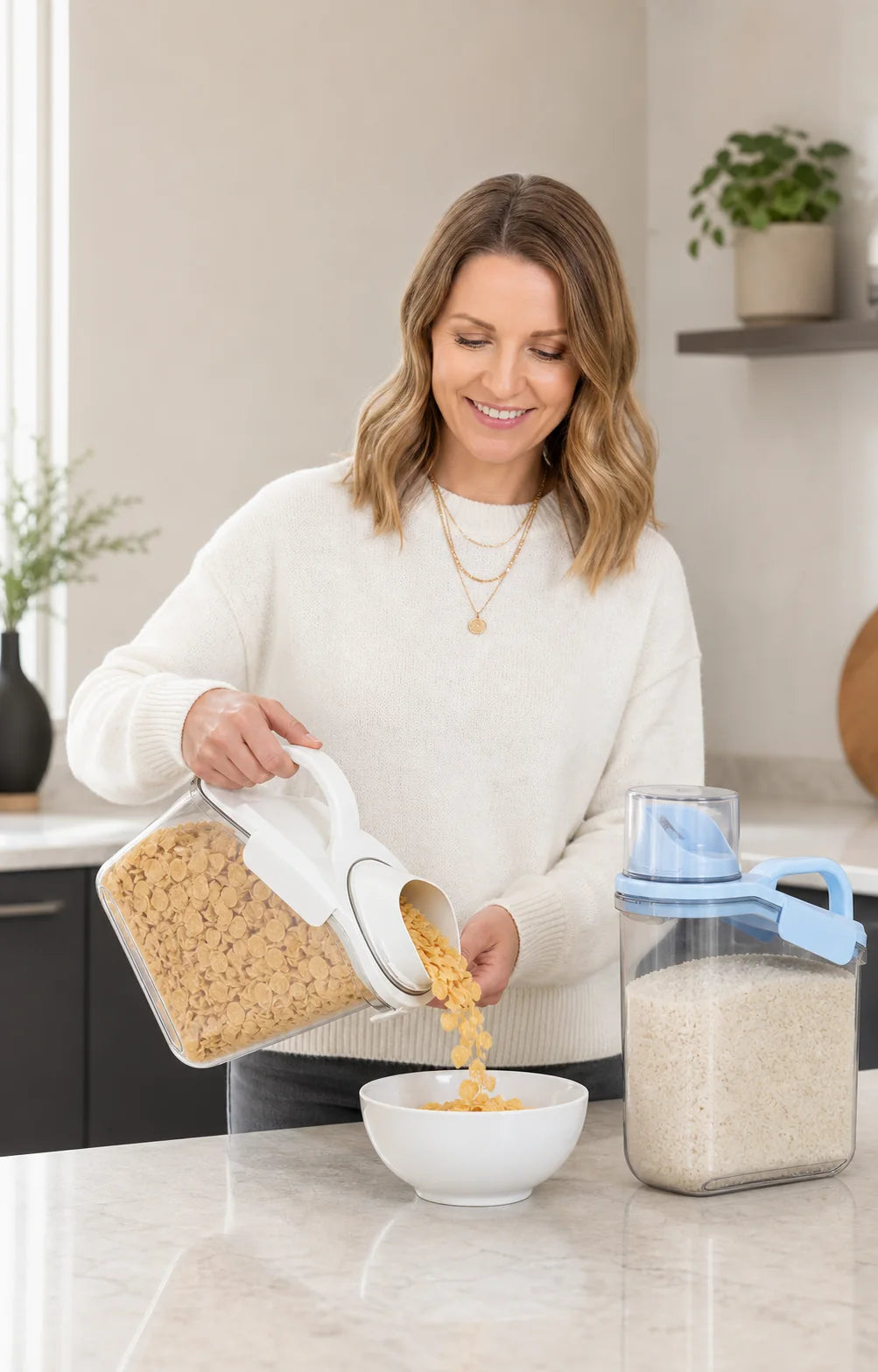
Keep reserve cereal, rice and oats together behind the everyday containers. Use food-safe, dry storage such as WAFORA PourSeal only for foods and uses listed in the product instructions. Label the front-facing side so the contents can be read before the container is moved.
Place newer packages behind older ones. A short monthly scan is usually more effective than a large annual pantry cleanout because expired or forgotten duplicates are caught early.
Maintain visibility with one-in, one-out rules
Give each category a maximum footprint. When the bin is full, use or remove something before adding more. This prevents the cabinet from slowly returning to several unplanned rows.
Connect the cabinet to nearby drawers with WAFORA’s kitchen-drawer organization guide. Items should live where they are used, not wherever an empty gap happened to exist on organization day.
Common mistakes to avoid
- Buying organizers before measuring the door opening
- Stacking loose items in three deep rows
- Putting heavy objects above shoulder height
- Using opaque bins without front labels
- Operating heat-producing appliances inside a closed cabinet
- Letting reserve stock hide everyday items
Frequently asked questions
Are lazy Susans good for deep cabinets?
They can help with small jars when the turntable fits the opening and items remain stable. They waste corner space in some rectangular cabinets, so measure first.
What should go at the very back?
Only light or reserve items that can be pulled forward as one labeled group. Avoid burying daily items or fragile objects behind heavy cookware.
How do I organize a deep lower cabinet?
Use low pull-forward trays, keep heavy items near the front edge and avoid stacks that must be dismantled. Confirm the shelf can support the load.
How often should I reset a deep cabinet?
Do a quick monthly scan and a deeper review when the household’s cooking habits change or the bins stop closing easily.
Make the system easy to repeat
The best setup removes a small point of friction without adding a complicated routine. Measure first, follow the exact care or safety instructions for the products involved, and review the arrangement after a week of real use.
Start with measurements, then compare the WAFORA GlideTray for a compatible appliance or WAFORA PourSeal for dry-food access.


