

For equal-size burger patties, weigh the total ground meat, divide by the number of servings, weigh each portion, then shape every patty with the same diameter and thickness guide.
Uniform patties are easier to cook together because one is less likely to finish while another is still thick and underdone. The kitchen scale controls portion weight; a press or simple diameter guide controls shape. Handle ground meat gently and keep it cold while you work.
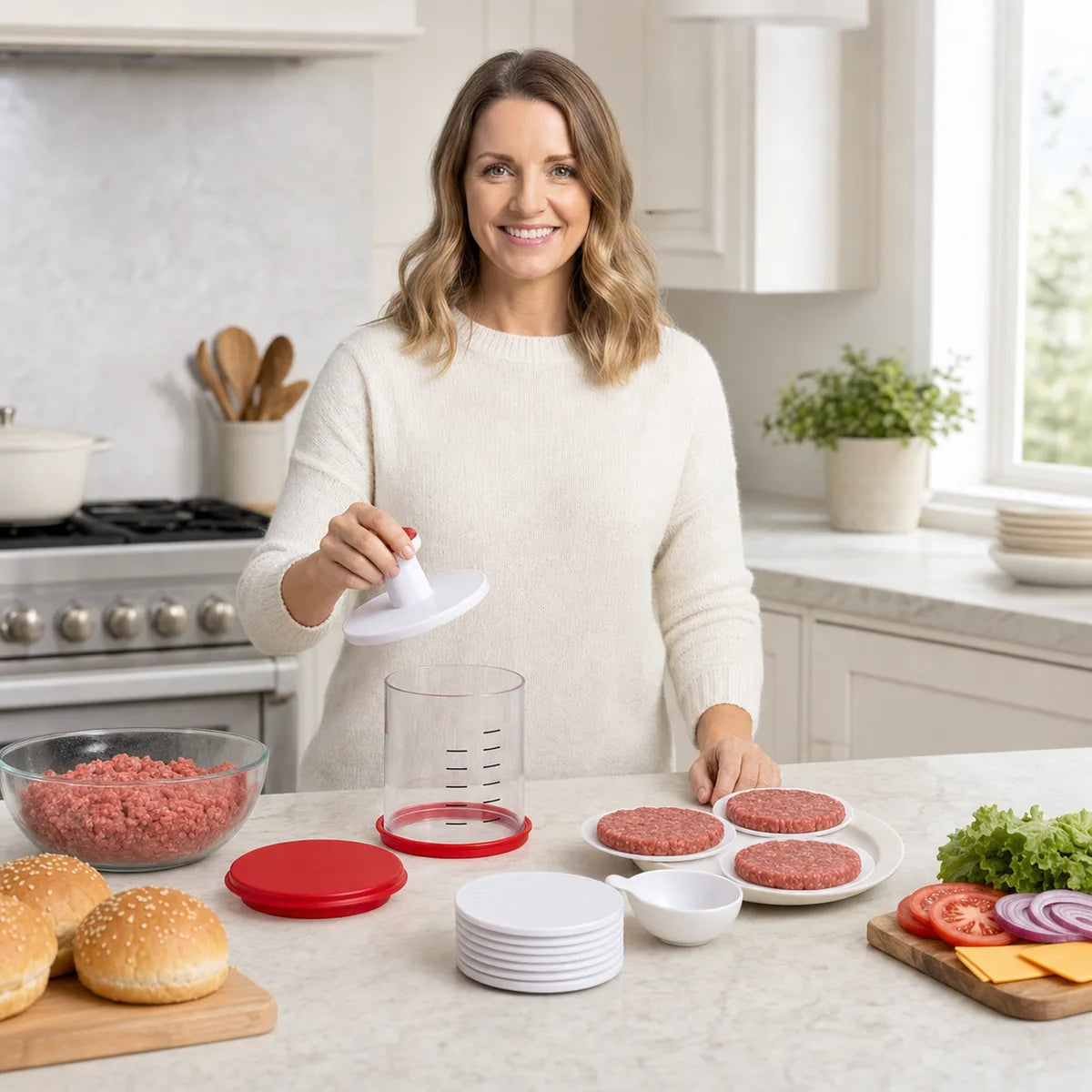
Choose the portion before shaping
Decide how many patties you need and whether the buns, grill space or storage container impose a maximum diameter. Weigh the meat, subtract any packaging and divide the net weight by the number of patties.
Place a small sheet of parchment on the scale and portion each piece to the target weight. Move excess meat between portions before shaping rather than tearing pieces from finished patties.
Keep the meat and workspace cold
Work with chilled ground meat and return portions to the refrigerator if preparation is delayed. Wash hands before and after handling raw meat, keep it separate from ready-to-eat food and clean tools and surfaces promptly.
Do not leave the full batch on the counter while you search for paper or containers. Prepare separators, the scale and storage tray first.
Shape with one diameter and thickness
Gently form each weighed portion into a loose ball, then press to the same diameter. Avoid repeatedly kneading or compressing the meat, which can produce a denser texture.
A tool such as WAFORA PattyPress makes the diameter and thickness repeatable. Use separators as directed and do not exceed the press capacity. If shaping by hand, trace one circle on parchment and use it as a visual guide.
Separate and label make-ahead patties
Place food-safe parchment or the product’s intended separator between patties. Cover and refrigerate promptly, or freeze using a method that prevents the stack from becoming one solid block.
WAFORA’s guide to freezing burger patties without sticking explains a freezer-first method. Label the meat type and preparation date, and follow current food-safety storage guidance.
Cook by temperature, not appearance
Cook ground beef, pork, veal and lamb to 160°F (71.1°C), and ground poultry to 165°F (73.9°C), measured with a food thermometer. Color alone is not a reliable safety test.
For a thin patty, insert the thermometer probe sideways so the sensing area reaches the center. Clean the thermometer according to its instructions before and after checking raw or cooked meat.
Common mistakes to avoid
- Eyeballing portions instead of weighing them
- Overworking the ground meat
- Shaping some patties much thicker than others
- Leaving raw meat at room temperature during prep
- Using color as the only doneness test
- Reusing raw-meat plates or utensils without washing
Frequently asked questions
Do burger patties need to be the same weight?
Equal weight is the best starting point for similar cooking times, but thickness and cooking position also matter.
Should I press patties tightly?
Use only enough pressure to create a stable, even shape. Excessive compression can make the texture dense.
How do I stop patties sticking to the press?
Use the separators or release method intended for the press, keep the tool clean and follow the product instructions.
What temperature should burgers reach?
USDA guidance lists 160°F for ground beef, pork, veal and lamb, and 165°F for ground poultry. Measure at the center with a food thermometer.
Make the system easy to repeat
The best setup removes a small point of friction without adding a complicated routine. Measure first, follow the exact care or safety instructions for the products involved, and review the arrangement after a week of real use.
For repeatable shape and easy separation, review the capacity and components of WAFORA PattyPress.
Further reading: USDA safe minimum internal temperature chart


